
NHS LOTHIAN | PODIATRY SERVICE
Corns
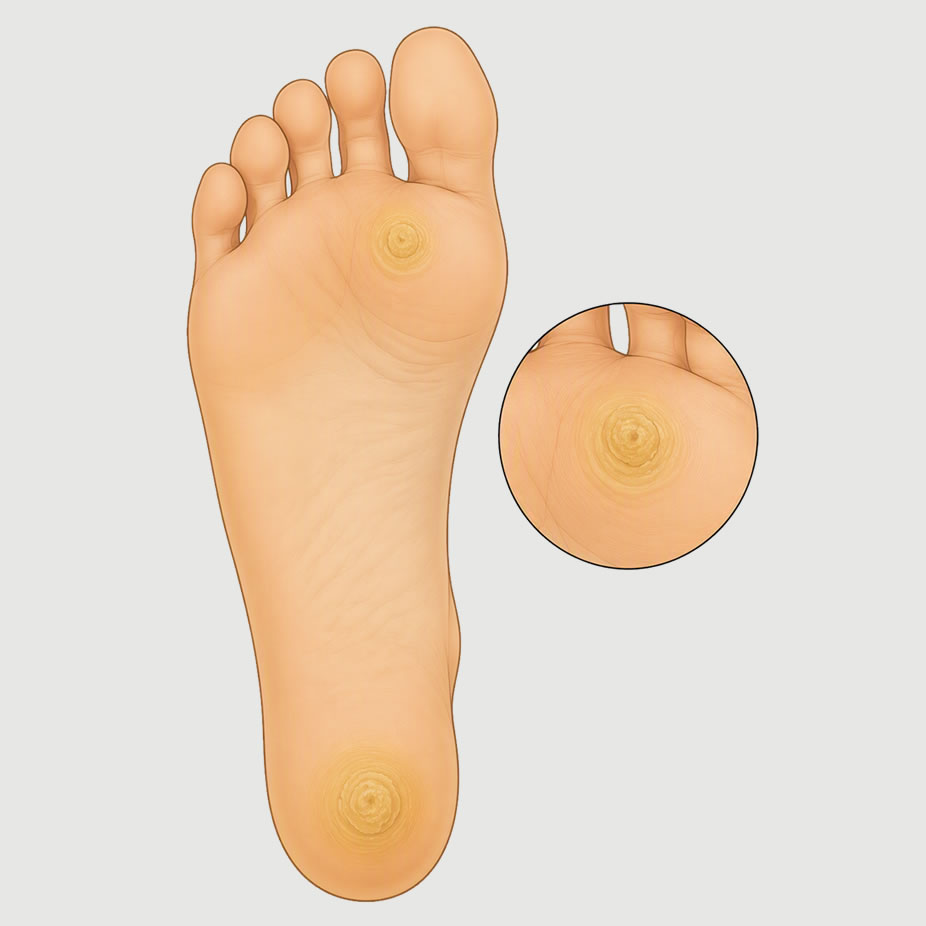
A corn is a small area of hard, thickened skin caused by repeated pressure or friction.
Like hard skin, it is the body’s way of protecting itself – but corns are more focused and can be very painful, particularly when walking or wearing shoes.
What are corns?
A corn is a small area of hard, thickened skin caused by repeated pressure or friction. Like hard skin, it is the body’s way of protecting itself — but corns are more focused and can be very painful, particularly when walking or wearing shoes.
Most corns can be managed at home by yourself, with help from a family member or friend, or with a private podiatrist if needed.
NHS Podiatry does not routinely treat corns. If your corn is painful and not improving despite regular self-care, contact your podiatry department for advice.
Types of corn
- Hard Corn – the most common type. A small, dense area of skin found on the tops of toes, the soles of the feet, or the sides of the toes where shoes rub.
- Soft Corn – found between the toes where moisture from sweat keeps the skin soft. Appears white and feels rubbery.
- Seed Corn – very small and usually painless. Often caused by dry skin.
- Vascular Corn – contains a small blood vessel or nerve, making it particularly painful or tender to touch. If you think you have this type, contact your podiatry department rather than attempting home treatment.
What causes corns?
- Shoes that are too tight, narrow or rub on the foot
- The natural shape of your foot or toes
- Dry skin
- Carrying extra weight
Are you at higher risk?
If you have diabetes or a weakened immune system, do not use sharp instruments or electric callous removers on your feet. Use a foot file gently instead and ask a family member or friend to help if needed. If your corn is causing any skin damage or significant pain, contact your podiatry department before attempting treatment.
What you can do at home
Filing:
Gently file the corn regularly using a handheld foot file. Filing after a bath or shower when the skin is softer makes this easier. Do not try to cut or dig out the corn with sharp instruments, this can break the skin and lead to infection.
If you find it hard to reach your feet, ask a family member or friend to help.
Moisturising:
Apply a good foot moisturiser or emollient to the affected area daily. This keeps the skin soft and helps prevent corns from hardening further.
Avoid moisturising between the toes, keeping this area dry helps prevent fungal infections.
Footwear:
Pressure from poorly fitting shoes is one of the most common causes of corns. Check there is a full thumb’s width between your longest toe and the end of the shoe, and that nothing is rubbing or squeezing the toes.
Addressing footwear is one of the most effective ways to prevent corns from returning.
When to contact your podiatry department
Contact your podiatry department if:
- your corn is painful and not improving after several weeks of regular self-care
- the corn turns dark purple or black
- the surrounding skin becomes red, hot or swollen
- there is fluid or pus leaking from the area
- you have diabetes or a weakened immune system, and the skin is broken or painful
- you think you may have a vascular corn
Need more support?
If home care is not possible and you have no one to help, a private podiatrist can provide regular corn treatment. Always check they are registered with the Health and Care Professions Council (HCPC) at www.hcpc-uk.org.
Affordable local foot care services may also be available — your GP surgery or local council can advise.
Self-Referral Form
CONTACT INFORMATION
NHS Lothian Podiatry
Mon-Thu: 8:30am-4pm
Fri: 8am-3:30pm
Telephone: (0131) 536 1627
ABOUT US
Podiatrists are allied healthcare professionals trained to help prevent, diagnose, and treat problems affecting your feet and lower limbs.
Podiatry’s primary aim is to improve the mobility, independence, and quality of life for their patients.
SHARE THIS PAGE
© NHS LOTHIAN | PODIATRY SERVICE.