
NHS LOTHIAN | PODIATRY SERVICE
Diabetes & Feet
Having diabetes means you need to take extra care of your feet.
With the right daily routine, most serious foot problems can be prevented.

Urgent – Act Now if you notice
- A red, hot, swollen or painful foot
- A wound, sore or break in the skin that is not healing
- Fluid or pus leaking from anywhere on the foot
During working hours:
Call NHS Podiatry on 0131 536 1627
Monday–Thursday 8:30am–4pm, Friday 8am–3:30pm
Outside working hours:
Call NHS 24 on 111
Do not wait to see if it improves.
How diabetes affects your feet
Diabetes can affect your feet in two main ways – and often both at the same time.
Nerve damage (neuropathy)
Diabetes can damage the nerves in your feet over time, reducing your ability to feel pain, heat or pressure. This means you may not notice a cut, blister or pressure sore forming.
Signs to look for:
- Numbness, tingling or burning in your feet
- Feeling like you are walking on a pebble
- A wound or sore you did not know was there
Why this matters: A small injury you cannot feel can quickly become a serious problem if not spotted and treated early.
Poor circulation
Diabetes can narrow the blood vessels that supply your feet, reducing blood flow. Poor circulation means wounds heal more slowly and infections can take hold more easily.
Signs to look for:
- Leg pain or cramping when walking
- Cold or pale feet
- Wounds that are slow to heal
Why this matters: Even a minor cut or sore can become infected and difficult to heal if blood flow to your feet is poor.
Foot ulcers
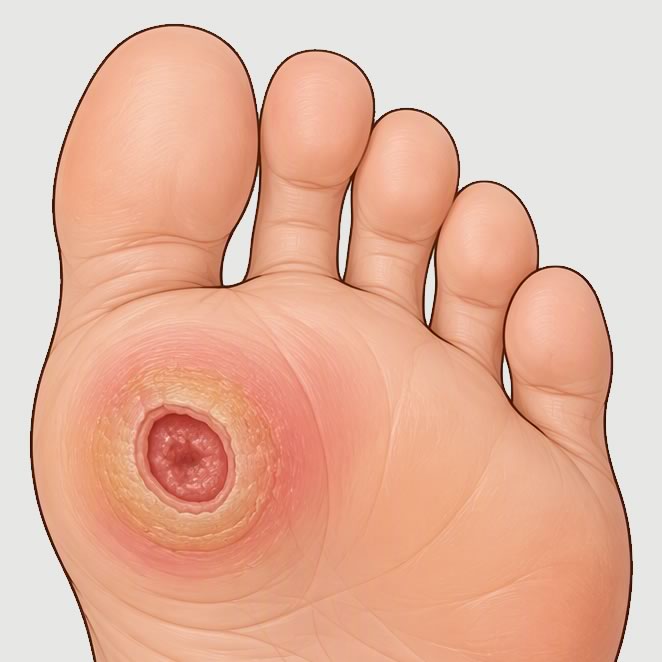
Diabetic foot ulcers are open sores that typically develop on the foot. They are often caused by a combination of factors, including poor circulation, neuropathy (nerve damage), footwear and trauma.
Signs to look for:
- A break in the skin that does not heal
- Redness or swelling around an area
- Fluid, pus, or discharge
Why this matters: Foot ulcers can become infected very quickly. If untreated, infection can spread, leading to:
- Cellulitis
- Sepsis
- Permanent tissue damage
- In severe cases, amputation
If you notice a wound or break in the skin, cover it with a clean dressing and contact your podiatry team or GP urgently.
Your risk level
When you are seen by our team you will be placed into one of three categories. This helps us make sure you get the right level of care.
Low Risk
None of the following are present:
- Significant hard skin
- Foot deformity
- Loss of sensation
- Poor circulation
Moderate Risk
One of the following is present:
- Significant hard skin
- Foot deformity
- Loss of sensation
- Poor circulation
High Risk
Two or more of the following are present:
- Significant hard skin
- Foot deformity
- Loss of sensation
- Poor circulation
If you are moderate or high risk, your podiatry team will discuss what this means for you and how often you should be seen.
Daily foot care
The single most important thing you can do is check your feet every day. Because nerve damage may mean you cannot feel an injury, looking is your early warning system.
Daily Foot Check
- Check for cuts, blisters, redness
- Look for heat or swelling
- Use a mirror if needed
- Cover any wound immediately
Footwear
- Never walk barefoot
- Check inside shoes first
- Full thumb’s width at the toe
- Wide fitting, laces or straps
- Seamless socks
Nail Care
- File – do not cut
- Keep short and smooth
- Ask for help if needed
Skin Care
- Moisturise daily
- Not between the toes
- Use a pumice stone for hard skin
- No sharp instruments
Stay Active
- Improves circulation
- Short walks make a difference
- Manage blood glucose levels
Stop Smoking
- Smoking reduces circulation to your feet
- NHS stop smoking support is available
- Ask your GP or pharmacist
Contact Us
Use our self-referral form or call us directly if you have:
- Any cut, sore or open wound on your foot
- Signs of infection — redness, heat or swelling
- New or worsening pain in your foot or leg
Call NHS Podiatry on 0131 536 1627
Monday–Thursday 8:30am–4pm, Friday 8am–3:30pm
Self-Referral Form
CONTACT INFORMATION
NHS Lothian Podiatry
Mon-Thu: 8:30am-4pm
Fri: 8am-3:30pm
Telephone: (0131) 536 1627
ABOUT US
Podiatrists are allied healthcare professionals trained to help prevent, diagnose, and treat problems affecting your feet and lower limbs.
Podiatry’s primary aim is to improve the mobility, independence, and quality of life for their patients.
SHARE THIS PAGE
© NHS LOTHIAN | PODIATRY SERVICE.