
NHS LOTHIAN | PODIATRY SERVICE
Sever’s Disease
Sever’s Disease is a condition characterised by pain around the heel bone.
The condition usually affects girls aged 8–10 years and boys aged 10–14 years, although this can happen at any stage while growing.
What is Sever’s Disease?
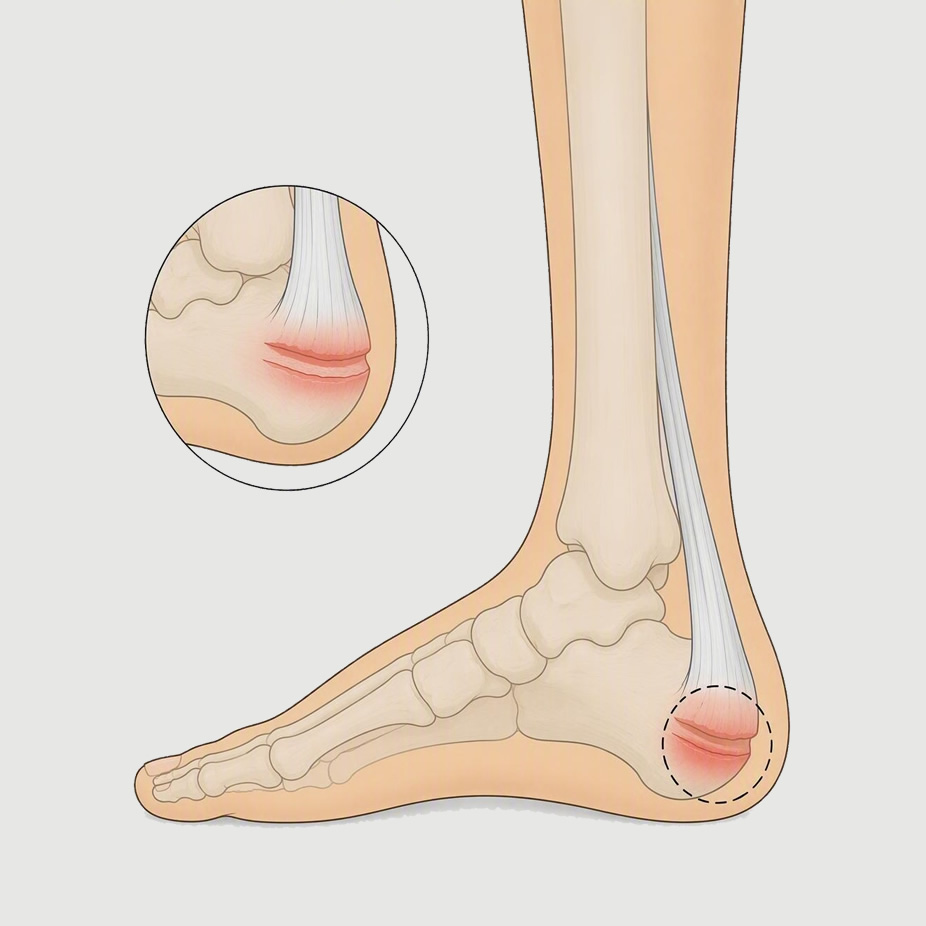
Sever’s Disease (sometimes known as Calcaneal Apophysitis) is a condition characterised by pain around the heel bone. The condition affects children/teenagers at growth spurts and/or who participate in activities such as football, running and jumping. It usually affects girls aged 8 – 10 years and boys aged 10 – 14 years, although this can happen at any stage while growing. This can occur many times while you are growing.
What causes Sever’s Disease?
Some of the most common causes of Sever’s Disease are as follows:
Common Causes include:
- Growth spurts- the long bones of the leg grow at a faster rate than the muscles that are around them. This causes tight calf muscles which pull on the Achilles tendon causing heel pain
- Sport and activity involving running and/or jumping
- Low levels of Vitamin D may be a contributing factor
- Some underlying medical conditions
Signs and Symptoms:
- Pain on the back of the heel sometimes with visible swelling
- Can affect both heels or one heel
- Pain can be made worse when running or jumping
- The pain is often worse in flat shoes
- The pain improves with rest
Who can get Sever’s?
- Children and adolescents going through a large growth spurt.
- Children aged 8-15 with a greater incidence in boys.
- Children and adolescents who participate in repeated high intensity activity with higher impact such as hopping, jumping and change of direction.
- Higher incidence in those who specialise in only one sport
How is the condition diagnosed?
The podiatrist will diagnose the condition during an assessment and detailed history taking. In most cases x-rays or scans are not needed.
What can I do to help myself?
It is important to try to work out what leads to your pain. Avoiding the causes or triggers of painful symptoms is one of the most important parts of helping your recovery.
Consider the following options:
Footwear
Modify activity levels
Ice packs
Aim for a healthy body weight
Pain medication
Being patient
Excercises
Ankle Mobility
Gastrocnemius Stretch
Soleus Stretch
What if my symptoms fail to resolve?
If after 6 weeks following the above advice, your problem has not improved seek advice from a Podiatrist.
NHS 24 MSK Help app
Free app with further exercise guidance and self-management support for MSK conditions. Available on the App Store and Google Play.

Self-Referral Form
CONTACT INFORMATION
NHS Lothian Podiatry
Mon-Thu: 8:30am-4pm
Fri: 8am-3:30pm
Telephone: (0131) 536 1627
ABOUT US
Podiatrists are allied healthcare professionals trained to help prevent, diagnose, and treat problems affecting your feet and lower limbs.
Podiatry’s primary aim is to improve the mobility, independence, and quality of life for their patients.
SHARE THIS PAGE
© NHS LOTHIAN | PODIATRY SERVICE.