

NHS LOTHIAN | PODIATRY SERVICE
Athlete’s Foot
Athlete’s foot is a common fungal infection affecting the skin of the feet. It is caused by fungi that thrive in warm, moist environments and can spread easily between people.
It most commonly affects the skin between the toes but can also occur on the soles and sides of the feet.
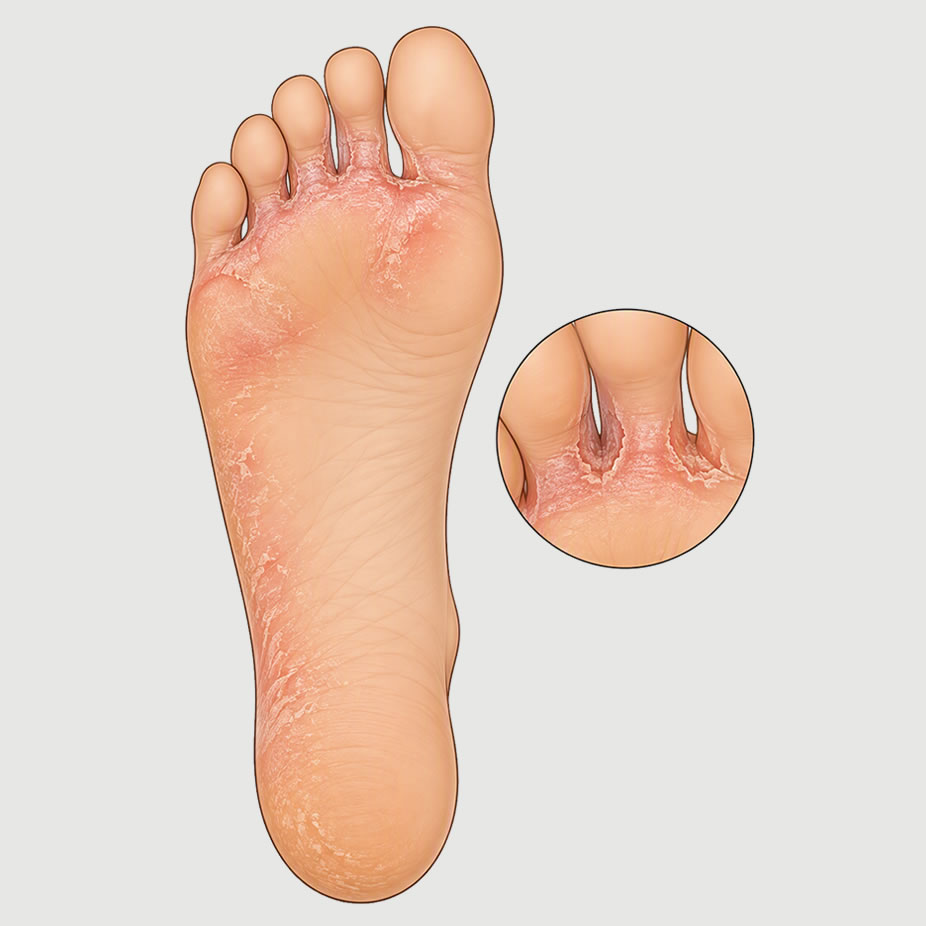
What is Athlete’s Foot?
Athlete’s foot (Tinea Pedis) is a common fungal infection affecting the skin of the feet. It is caused by fungi that thrive in warm, moist environments and can spread easily between people. It most commonly affects the skin between the toes but can also occur on the soles and sides of the feet.
Most cases of athlete’s foot can be managed at home. Early treatment and good foot hygiene can help clear the infection and reduce the likelihood of it returning.
What does Athlete’s Foot look like?
- Dry, flaky or peeling skin
- White, soggy-looking skin between the toes
- Redness or irritation
- Itching or burning
- Small cracks or splits in the skin
- Occasionally small fluid-filled blisters
- Athlete’s foot can affect one or both feet
What causes Athlete’s Foot?
- Warm, damp environments that allow fungi to grow
- Sweaty feet or footwear that does not allow the feet to breathe
- Walking barefoot in communal changing rooms, showers or swimming pool areas
- Wearing damp socks or shoes for prolonged periods
- Sharing towels, socks or footwear with someone who has the infection
What you can do at home
Foot Hygiene:
Wash your feet regularly and dry them thoroughly, particularly between the toes. Keeping the skin dry helps reduce fungal growth.
Socks & Footwear:
Change your socks every day, or more often if they become damp. Choose breathable footwear where possible and avoid wearing the same pair of shoes on consecutive days, allowing them time to dry out fully.
Prevent Spread:
Avoid sharing towels, socks or footwear. Try not to scratch affected areas, as this can damage the skin and allow infection to spread.
Treatment
Antifungal treatments are available from pharmacies without a prescription. A pharmacist can advise on the most appropriate product and how to use it. It is important to complete the recommended course of treatment, even if symptoms improve.
Are you at higher risk?
If you have diabetes, poor circulation, reduced sensation or a condition that affects your immune system, seek advice promptly if you develop athlete’s foot. Small breaks in the skin can increase the risk of further complications.
When to seek further advice
Athlete’s foot does not usually require specialist treatment. Speak to a pharmacist or healthcare professional if:
- your symptoms are not improving with treatment
- the infection is spreading or becoming increasingly painful
- the skin becomes very cracked, swollen or inflamed
- the surrounding skin becomes red, hot or swollen
- there is fluid or discharge coming from the affected area
- you have diabetes, poor circulation, reduced sensation or another condition that increases your risk of foot complications
Do not ignore a painful, red or swollen foot, particularly if you are at higher risk of foot problems.
Self-Referral Form
CONTACT INFORMATION
NHS Lothian Podiatry
Mon-Thu: 8:30am-4pm
Fri: 8am-3:30pm
Telephone: (0131) 536 1627
ABOUT US
Podiatrists are allied healthcare professionals trained to help prevent, diagnose, and treat problems affecting your feet and lower limbs.
Podiatry’s primary aim is to improve the mobility, independence, and quality of life for their patients.
SHARE THIS PAGE
© NHS LOTHIAN | PODIATRY SERVICE.