
NHS LOTHIAN | PODIATRY SERVICE
Ingrown Toenails
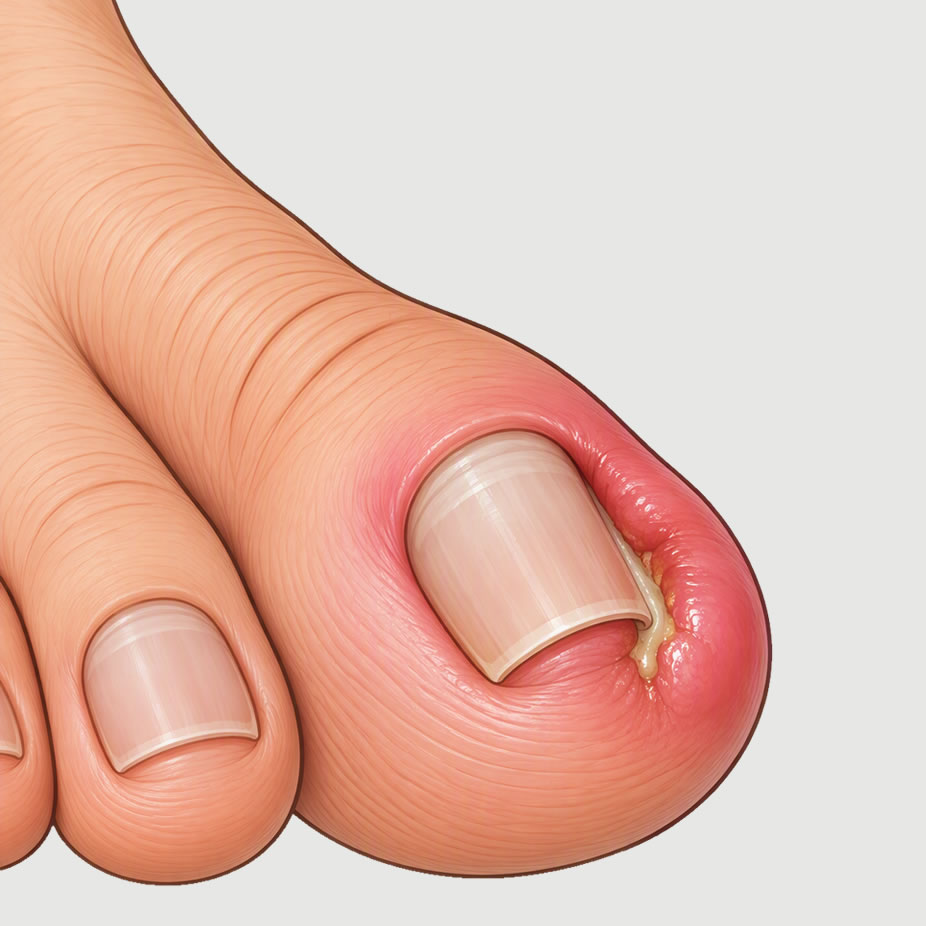
An ingrown toenail is where the edge of the nail grows into the surrounding skin, causing pain, redness and swelling.
In some cases it can cause bleeding or a discharge of fluid or pus.
What are ingrown toenails?
An ingrown toenail is where the edge of the nail grows into the surrounding skin, causing pain, redness and swelling. In some cases it can cause bleeding or a discharge of fluid or pus.
If you think you have an ingrown toenail, contact your podiatry department straight away. Do not attempt to cut the nail yourself.
Are you at higher risk?
If you have diabetes or a weakened immune system, contact your podiatry department immediately – do not attempt any home treatment. Even a minor ingrown toenail can lead to serious infection if you are at higher risk.
What causes ingrown toenails?
- The shape of your nails – some people are simply born with more curved nails
- Tight or narrow footwear pressing on the nail over time
- Repeated pressure or trauma to the toe
- Skin conditions such as psoriasis
What to do while you wait for your appointment
While waiting to be seen, the following steps can help reduce discomfort and lower the risk of infection:
Nail Care:
- Do not cut down the sides of the nail or attempt to dig out the nail edge — this can make things worse
- Keep the toe clean and dry
- Apply an antiseptic cream to the area if the skin is broken
Footwear:
- Wear wide-fitting shoes or sandals to reduce pressure on the toe
- Avoid tight or pointed footwear until the nail has been treated
Pain Relief:
- Paracetamol can help manage discomfort while you wait — follow the instructions on the packaging
What to expect from your podiatry appointment
A podiatrist can treat most ingrown toenails in clinic without surgery. In cases where the nail keeps becoming ingrown, a minor surgical procedure may be recommended to prevent it returning. Your podiatrist will explain your options at your appointment.
Signs of infection – Seek help urgently
If you notice any of the following, contact your podiatry department urgently or visit your GP:
- Increasing redness, heat or swelling around the nail
- Fluid or pus leaking from the toe
- The pain is getting rapidly worse
How to prevent ingrown toenails
- Cut nails straight across the top — not rounded at the corners
- Do not cut nails too short — aim to leave a small amount of white nail at the tip
- Wear well-fitting shoes with a full thumb’s width between your longest toe and the end of the shoe
- Avoid picking at or tearing the skin around the nail
Need more support?
If you are unable to access NHS Podiatry, a private podiatrist can assess and treat ingrown toenails. Always check they are registered with the Health and Care Professions Council (HCPC) at www.hcpc-uk.org.
Self-Referral Form
CONTACT INFORMATION
NHS Lothian Podiatry
Mon-Thu: 8:30am-4pm
Fri: 8am-3:30pm
Telephone: (0131) 536 1627
ABOUT US
Podiatrists are allied healthcare professionals trained to help prevent, diagnose, and treat problems affecting your feet and lower limbs.
Podiatry’s primary aim is to improve the mobility, independence, and quality of life for their patients.
SHARE THIS PAGE
© NHS LOTHIAN | PODIATRY SERVICE.