
NHS LOTHIAN | PODIATRY SERVICE
Footwear
The shoes you wear every day have a direct impact on your foot health.
Good footwear reduces pressure, prevents pain and helps manage many common foot conditions.
Footwear
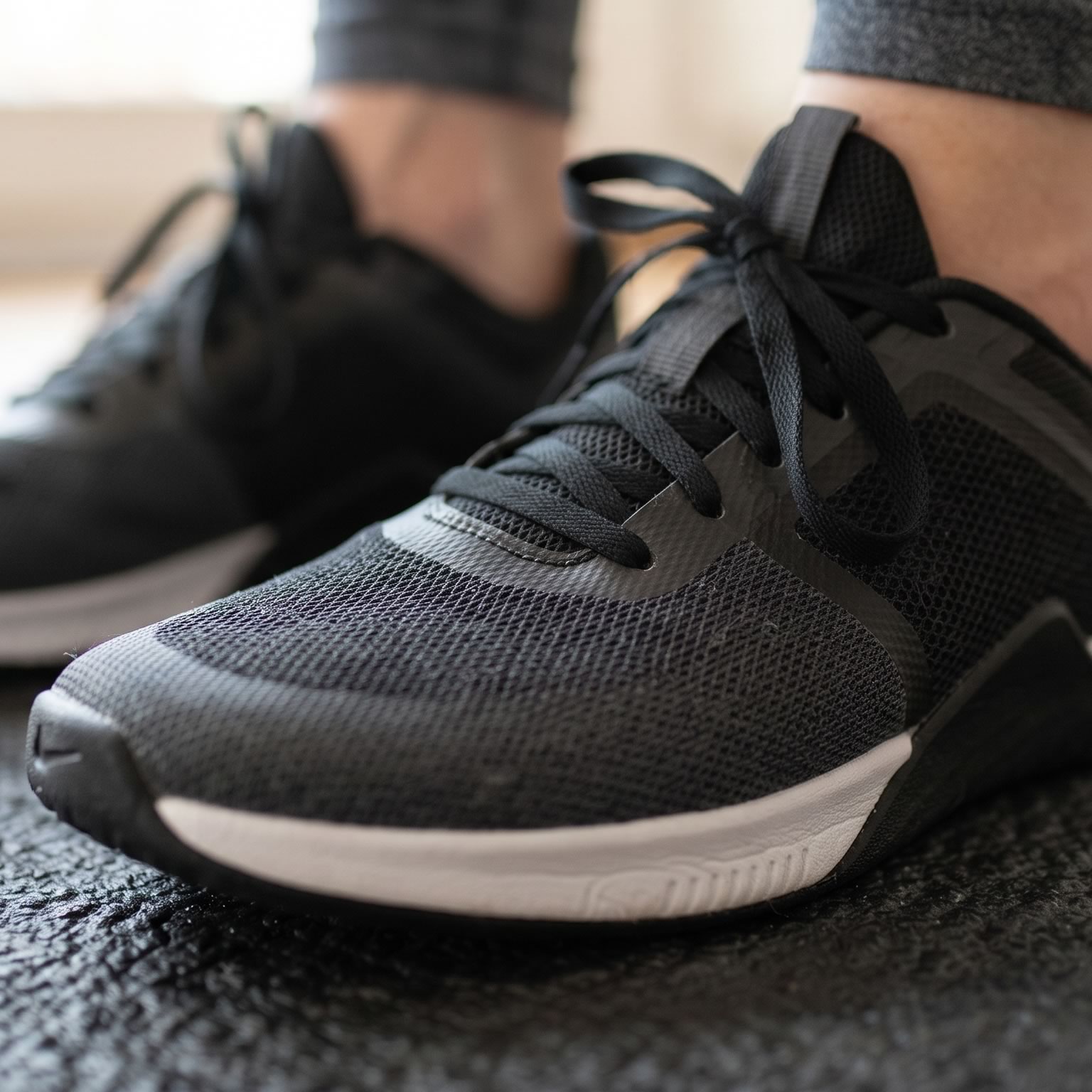
The shoes you wear every day have a direct impact on your foot health. Good footwear reduces pressure, prevents pain and helps manage many common foot conditions. Most foot problems seen by podiatrists are made worse, or caused, by poorly fitting shoes.
How to check your footwear fits
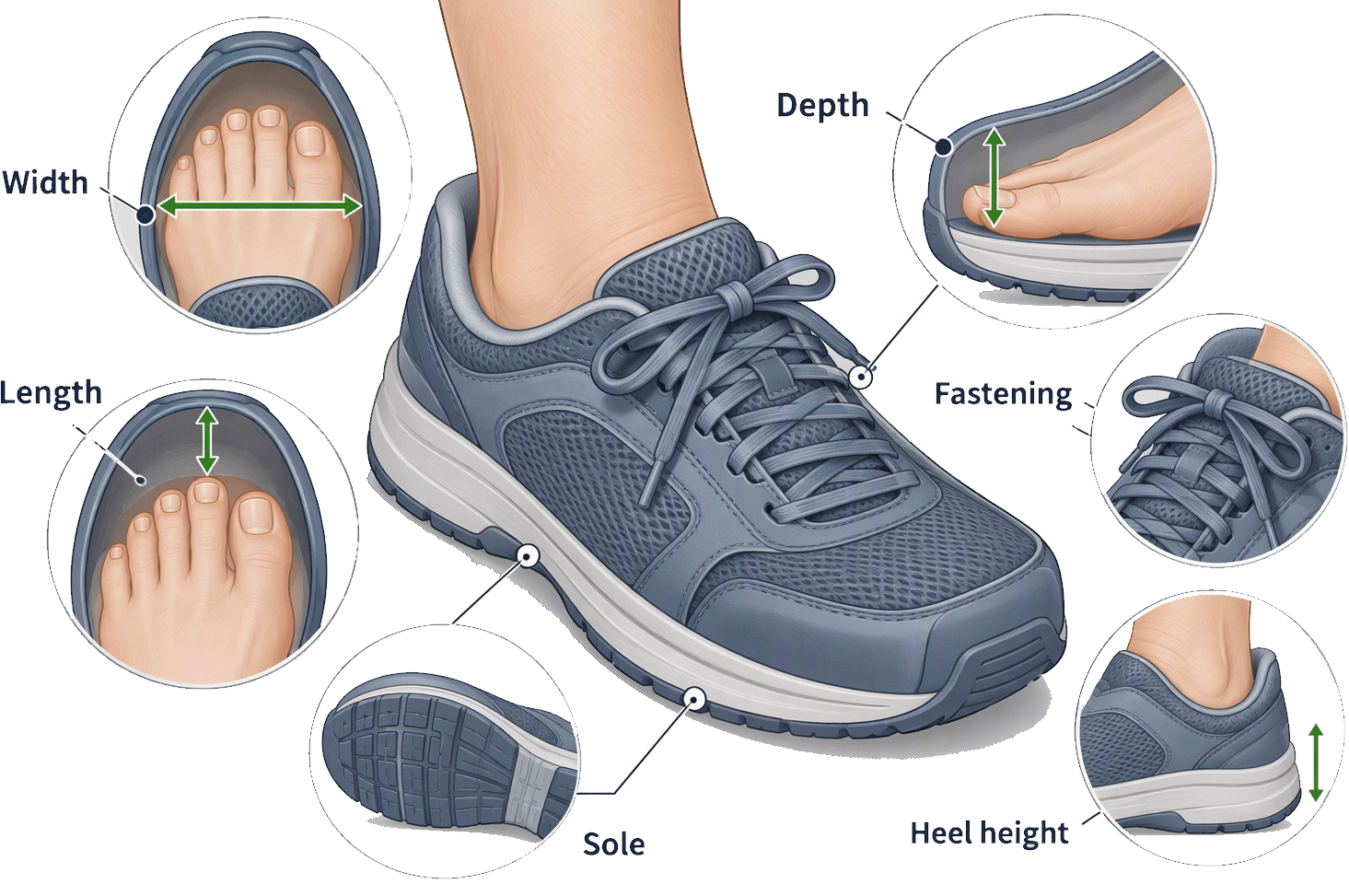
Length
There should be a full thumb’s width between your longest toe and the end of the shoe. If your toes are touching the end, the shoe is too short.
Width
The widest part of the shoe should match the widest part of your foot. Your toes should not be squeezed together or spilling over the sides.
Depth
There should be enough room across the top of the foot. The shoe should not press down on your toenails.
Fastening
Shoes with laces, straps or buckles hold the foot more securely than slip-on styles and reduce the risk of your foot sliding forward.
Sole
A semi-rigid sole with some flexibility provides the best support for most people. Avoid soles that are very thin, very hard or completely flat.
Heel Height
A heel between 1cm and 4cm is ideal for most people. Very flat shoes and very high heels both increase strain on the foot and lower leg.
Footwear tips for common situations
At home
At work
For exercise
As you age
Orthotics
Orthotics are insoles placed inside shoes to support the foot, redistribute pressure and improve function. They can help manage pain and make walking more comfortable.
Not everyone needs orthotics
They are not suitable for all conditions and should only be recommended following an assessment by a podiatrist. If you think you may benefit, speak to a podiatrist before purchasing insoles – the right footwear alone may be sufficient:
Over-the-counter insoles
Available from pharmacies and sports shops. These provide general cushioning and support and may help with mild symptoms.
Custom orthotics
Made specifically for your foot and are prescribed by a podiatrist following an assessment. If you think you may benefit from custom orthotics, you can self-refer to NHS Podiatry using the form at the foot of this page.
Specialist footwear
In some cases, shoes designed or adapted for specific clinical needs may be recommended. This is provided through the orthotics department and requires a referral. Your podiatrist can advise if this is appropriate for you.
Getting further help
If you are experiencing foot pain related to your footwear, or are unsure which footwear is right for your condition, a podiatrist can advise you.
You can self-refer to NHS Lothian Podiatry using our self-referral form, or call us on 0131 536 1627
Monday–Thursday 8:30am–4pm, Friday 8am–3:30pm
Self-Referral Form
CONTACT INFORMATION
NHS Lothian Podiatry
Mon-Thu: 8:30am-4pm
Fri: 8am-3:30pm
Telephone: (0131) 536 1627
ABOUT US
Podiatrists are allied healthcare professionals trained to help prevent, diagnose, and treat problems affecting your feet and lower limbs.
Podiatry’s primary aim is to improve the mobility, independence, and quality of life for their patients.
SHARE THIS PAGE
© NHS LOTHIAN | PODIATRY SERVICE.