
NHS LOTHIAN | PODIATRY SERVICE
Chilblains
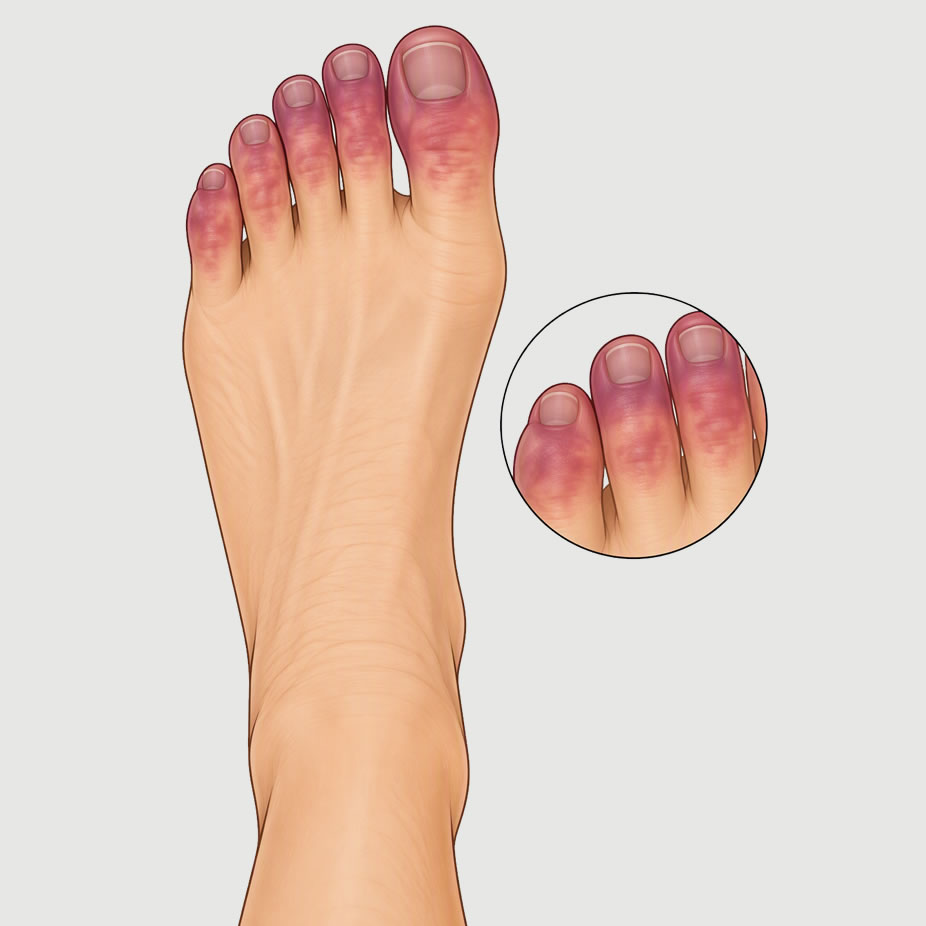
Chilblains are small patches of swollen, discoloured skin that develop in response to cold weather. They most commonly affect the toes but can also appear on the fingers, heels, ears and nose.
They may look red, blue or purple and can feel itchy, painful or as though they are burning.
What are chilblains?
Chilblains are small patches of swollen, discoloured skin that develop in response to cold weather. They most commonly affect the toes but can also appear on the fingers, heels, ears and nose. They may look red, blue or purple and can feel itchy, painful or as though they are burning.
The good news is that chilblains usually clear up on their own within two to three weeks.
NHS Podiatry does not routinely treat chilblains. Most cases resolve without medical attention.
What you can do at home
Keeping Warm:
- Wear warm socks. Natural fibres such as cotton or wool are best as they allow your skin to breathe and help maintain a steady temperature
- Change into a clean, dry pair of socks before bed
- Warm your feet gradually. Do not place them directly next to a fire or use hot water bottles, as sudden heat can make chilblains worse
- Avoid wearing damp shoes or socks
- Warm up gradually when coming in from the cold. Sudden heat makes chilblains worse
- If you smoke, stopping can improve your circulation and reduce how often chilblains occur
Staying Active:
Regular gentle activity helps improve circulation and reduces the risk of chilblains developing.
Short walks or simple foot exercises can make a difference during cold weather.
Soothing Discomfort:
Your pharmacist can recommend over-the-counter creams to help soothe itching and discomfort. Ask your pharmacist for advice.
When to contact your podiatry department
Chilblains that are itchy or mildly uncomfortable do not need medical attention and will usually resolve on their own. Contact your podiatry department if:
- your chilblains are causing severe pain that is not improving
- the skin is broken or showing signs of infection
- the surrounding skin becomes red, hot or swollen
- there is fluid or pus leaking from the skin
Need more support?
If you are unsure about your symptoms or they are not improving after three weeks, speak to your GP or refer directly to NHS Podiatry.
Self-Referral Form
CONTACT INFORMATION
NHS Lothian Podiatry
Mon-Thu: 8:30am-4pm
Fri: 8am-3:30pm
Telephone: (0131) 536 1627
ABOUT US
Podiatrists are allied healthcare professionals trained to help prevent, diagnose, and treat problems affecting your feet and lower limbs.
Podiatry’s primary aim is to improve the mobility, independence, and quality of life for their patients.
SHARE THIS PAGE
© NHS LOTHIAN | PODIATRY SERVICE.