
NHS LOTHIAN | PODIATRY SERVICE
Verrucae
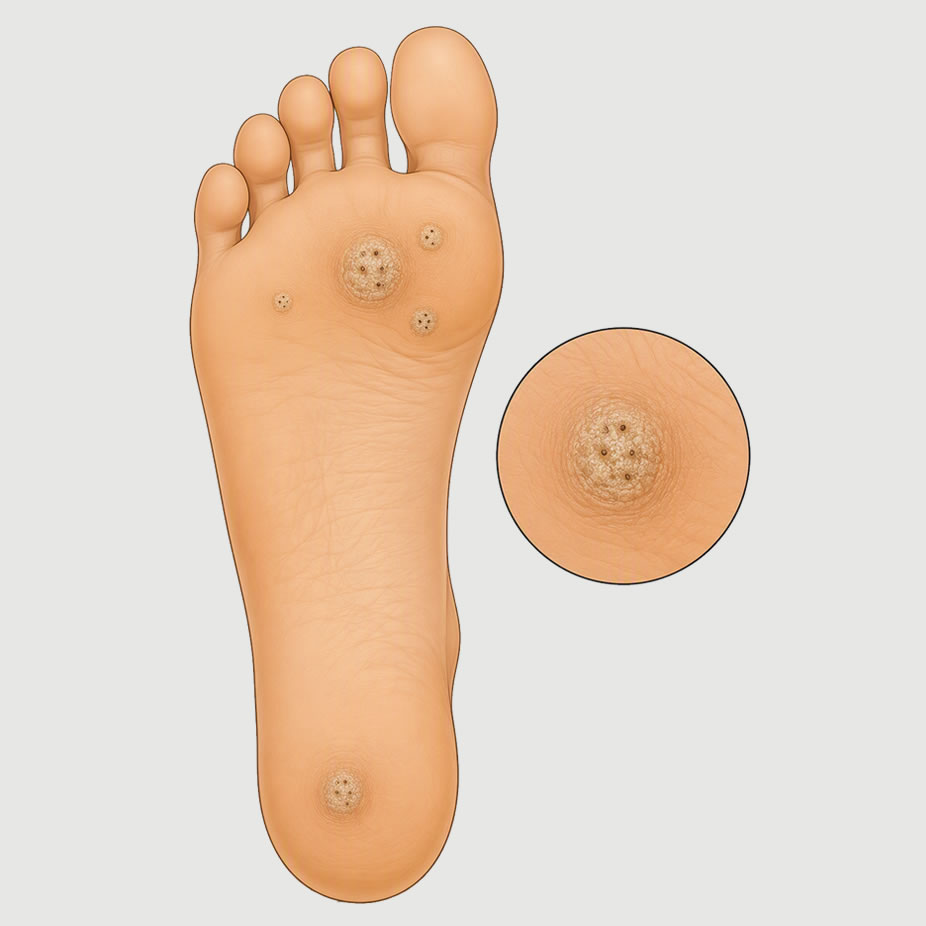
A verruca is a wart on the foot caused by a common virus called HPV (human papillomavirus). Because of the pressure from standing and walking, verrucae appear flattened rather than raised.
They may feel like a small stone under the foot and can sometimes be uncomfortable.
What are verrucae?
A verruca is a wart on the foot caused by a common virus called HPV (human papillomavirus). Because of the pressure from standing and walking, verrucae appear flattened rather than raised. They may feel like a small stone under the foot and can sometimes be uncomfortable.
Verrucae are harmless and often clear up on their own without any treatment. If yours is not causing pain or spreading, it is perfectly fine to leave it alone.
NHS Podiatry does not treat verrucae. Treatment is managed at home using pharmacy products.
Are you at higher risk?
If you have diabetes, poor circulation, loss of sensation in your feet, or are pregnant, do not use salicylic acid treatments. Use occlusive tape only and see when to contact your podiatry department if you have any concerns.
How long will it last?
Most verrucae clear up on their own within two years, though some can persist for longer. Treatment can help speed this up but there is no guaranteed cure – even with treatment, some verrucae take time to resolve.
What you can do at home
Most verrucae clear up on their own within two years, though some can persist for longer. Treatment can help speed this up but there is no guaranteed cure – even with treatment, some verrucae take time to resolve.
Salicylic Acid:
Salicylic acid is available as a paint or gel from most pharmacies. It works by gradually breaking down the skin of the verruca. Follow the instructions on the packaging carefully.
If the surrounding skin becomes red or sore, stop treatment and soak your foot in warm salty water (2–3 tablespoons of household salt in a bowl of warm water) for 10–15 minutes.
Occlusive tape:
Zinc oxide tape can be applied directly over the verruca and worn daily. It softens the verruca and can help reduce discomfort. Do not use duct tape – it is not a medical tape and can irritate the skin.
Stop it spreading
Verrucae are contagious. To avoid spreading to others or to other parts of your own foot:
- Wear flip-flops in communal showers, changing rooms and pool areas
- Cover the verruca with a plaster or zinc oxide tape when swimming or using shared facilities
- Do not share towels, socks or shoes
- Avoid touching or scratching the verruca
When to contact your podiatry department
NHS Podiatry does not treat verrucae. However, contact your podiatry department if:
- the verruca turns dark purple or black
- the surrounding skin becomes red, hot or swollen
- there is fluid or pus leaking from the area
- you have diabetes or a weakened immune system and the skin is broken or painful
Want further treatment?
Many private podiatrists offer treatments such as cryotherapy (freezing) for verrucae. These can be effective but usually require several appointments and are not always successful. Always check your podiatrist is registered with the Health and Care Professions Council (HCPC) at www.hcpc-uk.org
Self-Referral Form
CONTACT INFORMATION
NHS Lothian Podiatry
Mon-Thu: 8:30am-4pm
Fri: 8am-3:30pm
Telephone: (0131) 536 1627
ABOUT US
Podiatrists are allied healthcare professionals trained to help prevent, diagnose, and treat problems affecting your feet and lower limbs.
Podiatry’s primary aim is to improve the mobility, independence, and quality of life for their patients.
SHARE THIS PAGE
© NHS LOTHIAN | PODIATRY SERVICE.