
NHS LOTHIAN | PODIATRY SERVICE
Thick Nails
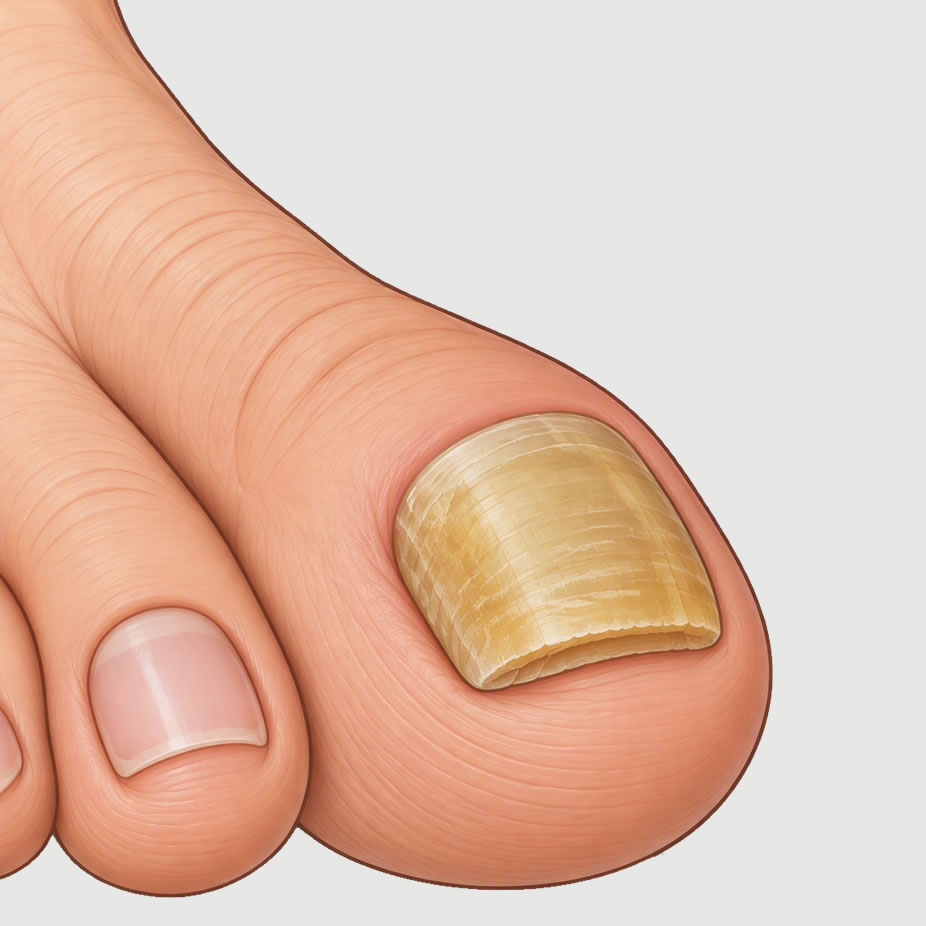
Thick toenails are very common and usually develop slowly over time. The nail becomes harder, thicker and more difficult to cut. It may also change colour, feel uncomfortable in shoes, or crumble at the edges.
What are thick nails?
Thick toenails are very common and usually develop slowly over time. The nail becomes harder, thicker and more difficult to cut. It may also change colour, feel uncomfortable in shoes, or crumble at the edges.
Most people manage thick nails at home — by themselves, with help from a family member or friend, or with a private podiatrist if needed.
NHS Podiatry and your GP do not treat thick or long nails that are not causing pain or breaking the skin.
Are you at higher risk?
If you have diabetes or a weakened immune system, use a nail file rather than clippers to keep your nails short and smooth. Ask a family member or friend to help if needed. If you have no one to help, see Need more support? below.
What you can do at home
Nail Care:
Cut straight across the top of the nail — not rounded at the corners. Use toenail clippers rather than scissors for better control. File down any rough or sharp edges afterwards to keep the nail smooth and reduce pressure in shoes.
If you find it hard to reach your feet, ask a family member or friend to help. Long-handled toenail clippers and nail files are available from most pharmacies.
Footwear:
Shoes that are too tight press on the nails and make them worse over time. Check there is a full thumb’s width between your longest toe and the end of the shoe, and that nothing is squeezing the sides of your toes.
Could it be a fungal infection?
If your nail is also discoloured, crumbly, or has an unpleasant smell, a fungal infection may be the cause. Nail care alone will not clear a fungal infection — it needs a different treatment.
Read our Fungal Nails page for advice.
When to contact your podiatry department
Thick or long nails that are not causing pain or breaking the skin do not need medical attention. Contact your podiatry department if:
- the skin around the nail is red, hot or swollen
- there is fluid or pus leaking from the nail
- the nail is pressing into or breaking the surrounding skin
Need more support?
If home nail care is not possible and you have no one to help, a private podiatrist can provide regular nail care. Always check they are registered with the Health and Care Professions Council (HCPC) at www.hcpc-uk.org.
Affordable local nail care services may also be available — your GP surgery or local council can advise.
Self-Referral Form
CONTACT INFORMATION
NHS Lothian Podiatry
Mon-Thu: 8:30am-4pm
Fri: 8am-3:30pm
Telephone: (0131) 536 1627
ABOUT US
Podiatrists are allied healthcare professionals trained to help prevent, diagnose, and treat problems affecting your feet and lower limbs.
Podiatry’s primary aim is to improve the mobility, independence, and quality of life for their patients.
SHARE THIS PAGE
© NHS LOTHIAN | PODIATRY SERVICE.