

NHS LOTHIAN | PODIATRY SERVICE
Tibialis Posterior Tendon Disfunction
TPTD is a progressive condition caused by changes in the tibialis posterior tendon, one of the major supporting structures of the foot, affecting the ability to support the arch.
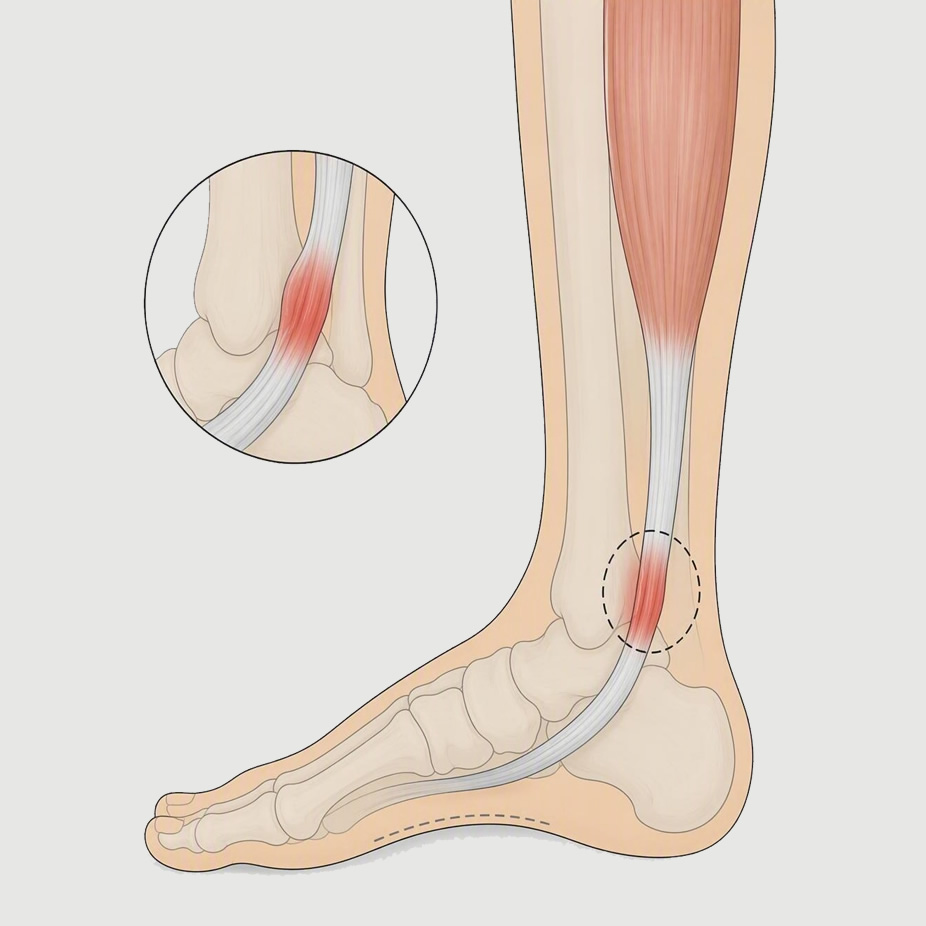
What is Tibialis Posterior Tendon Dysfunction?
The tibialis posterior tendon is one of the major supporting structures of the foot. Tibialis Posterior Tendon Dysfunction (TPTD) is a progressive condition caused by changes in the tendon, affecting the ability to support the arch. This results in flattening of the foot.
What causes Tibialis Posterior Tendon Dysfunction?
Causes:
Tibialis posterior tendon dysfunction (TPTD) is most commonly caused by gradual wear and tear of the tendon, which can lead to the arch flattening. As the arch flattens, there is more stress and strain placed on the tendon and the ligaments in the arch of the foot.
Tibialis posterior tendon dysfunction is more common in women and in people older than 40 years of age. Additional risk factors include obesity, diabetes, and hypertension.
Signs and Symptoms:
- Pain and swelling along the inside of the foot and ankle
- Pain that worsens with activity. High-intensity or high-impact activities can be very difficult
- Pain when walking or standing for long periods of time
- Difficulty and pain when standing on tip toes
- Noticeable change to the shape of the foot- flattening of the arch and inward rolling of the ankle
- Pain on the outside of the ankle. When the foot collapses, the heel bone may shift to an outwards position. This can put pressure on the outside ankle bone
- In severe cases, arthritis may also develop
What can I do to help myself?
It is important to try to work out what leads to your pain. Avoiding the causes or triggers of painful symptoms is one of the most important parts of helping your recovery.
Consider the following options:
Patience
Ice packs
Modify activity levels
Aim for a healthy body weight
Medication
Footwear
Excercises
Seated Heel Raises
Double Leg Heel Raises
Ankle Strengthening
What if my symptoms fail to resolve?
If after 6 weeks following the above advice, your problem has not improved seek advice from a Podiatrist.
NHS 24 MSK Help app
Free app with further exercise guidance and self-management support for MSK conditions. Available on the App Store and Google Play.

Self-Referral Form
CONTACT INFORMATION
NHS Lothian Podiatry
Mon-Thu: 8:30am-4pm
Fri: 8am-3:30pm
Telephone: (0131) 536 1627
ABOUT US
Podiatrists are allied healthcare professionals trained to help prevent, diagnose, and treat problems affecting your feet and lower limbs.
Podiatry’s primary aim is to improve the mobility, independence, and quality of life for their patients.
SHARE THIS PAGE
© NHS LOTHIAN | PODIATRY SERVICE.